Comprehensive Guide: How to Fix a Refrigerator That Is Not Cooling
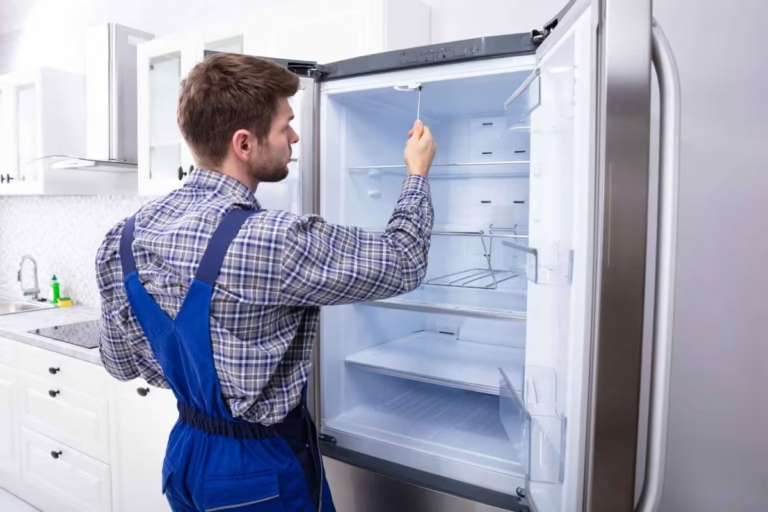
A refrigerator that stops cooling suddenly can become a big problem in the home.Perishable food can go bad in just a few hours, and the cost of calling a technician or buying a new fridge can feel really stressful.But don’t worry — a warm fridge doesn’t always mean it’s broken.Many times, the problem is something simple like a maintenance issue, a setting that got changed accidentally, or a small blockage that you can fix yourself without needing special tools.
First, check the power and thermostat.
Sometimes, when you move things around the kitchen or clean, the power cord can get loose.Make sure the outlet is working by plugging in another device or checking the breaker box to see if the circuit has tripped.
Next, look at the temperature settings.
The fridge should be between 35 and 38 degrees Fahrenheit, and the freezer should be at 0 degrees.If the thermostat was bumped, like when you put in a big bag of groceries, it might be set too low.Adjust it back to the right setting and wait 24 hours to see if it cools properly.
Dirty condenser coils are another common issue.
These coils are usually on the bottom front behind a panel or on the back of the fridge.They release heat into the room.Over time, they can get covered in dust, hair, and grease.This makes it hard for the fridge to cool, causing the compressor to overwork and stop.To fix this, unplug the fridge, clean the coils with a brush and vacuum, then plug it back in and let it run for a few hours to check if it’s working again.
Check the air vents and airflow inside as well.
Cold air moves from the freezer to the fridge through vents.If there’s a lot of food blocking these vents, the fridge won’t cool properly.Make sure there’s space around the vents and that the fridge isn’t too full.If the vents are clear but there’s ice buildup, it might be the defrost system.Try unplugging the fridge for 24 hours with the doors open to melt the ice.
The door seals are also important.
It is these rubber strips that keep cold air in and warm air out of the fridge. If they are cracked or damaged, the fridge will struggle to stay cold. Slide a dollar bill halfway into the door and close it. If you can easily pull it out, the seal isn’t working. Clean the seals with warm soapy water. If they’re cracked, you need to replace them.
In the event that these steps do not solve the issue, there may be a problem with the mechanical parts, such as the fans or relays. If the compressor is making noise but the fan isn’t, or the fan is running but the compressor isn’t, that could mean a fan motor or relay is broken.These parts are usually easy to replace and can often be fixed by someone with basic tools.
However, some problems are more serious.
If the compressor is very hot but doesn’t turn on, or keeps running but the fridge stays warm without any frost on the coils, there might be a refrigerant leak or valve problem.These repairs need special equipment and training, so it’s best to call a professional to handle them.
Frequently Asked Questions
Why is my freezer cold but my refrigerator section warm?
This happens when the air dam or damper between the freezer and refrigerator is stuck shut, or when frost blocks the airflow ducts inside.
It can also be caused by a broken evaporator fan that doesn’t move cold air from the freezer into the fridge area.
How do I know if my refrigerator compressor is broken?
When a compressor is broken, it might make loud knocking, clicking, or grinding sounds. If the fridge stays warm and the compressor clicks every few minutes without staying on, the start relay or the compressor itself might be faulty.
How long does it take for a refrigerator to cool down after being plugged in again?
After defrosting, the fridge usually takes 12 to 24 hours to reach the right temperature after being plugged in or reconnected.
What causes a refrigerator to stop cooling suddenly?
Sudden cooling loss is often caused by a tripped circuit breaker, a broken start relay, blocked evaporator coils from a failed defrost cycle, or heavy dirt on the condenser coils.
Can dirty condenser coils stop a refrigerator from cooling?
Yes, thick dust and pet hair on the condenser coils trap heat, making the compressor work too hard and possibly shutting it down before the fridge gets cold.
How often should I clean the refrigerator condenser coils?
You should clean the condenser coils at least once or twice a year, or every three to four months if you have pets that shed a lot.
Why is there ice forming on the back wall of my refrigerator?
Ice buildup on the back wall can be from high humidity entering through a damaged door seal, blocked drain tubes, or a faulty automatic defrost system.
How do I reset my refrigerator cooling system?
Unplug the fridge for thirty minutes to let the control board reset, then plug it back in and set the thermostat to 37°F.
Can overloading a refrigerator stop it from cooling?
Yes, if the fridge is too full, air vents get blocked and airflow is restricted, which creates warm spots inside the fridge.
How much does it cost to fix a refrigerator that isn’t cooling?
Minor fixes like replacing the door seal, start relay, or fan motor cost $50 to $200, while repairing the sealed system or compressor can cost over $500.
Is it worth fixing a 10-year-old refrigerator that isn’t cooling?
If the problem is with a cheap part like a fan motor or start relay, it’s worth fixing.
But if the compressor or sealed system is broken, replacing the fridge is usually better.
Why is my refrigerator running constantly but not cooling?
A fridge that runs non-stop without cooling usually has a refrigerant leak, worn-out compressor valves, dirty condenser coils, or a broken door seal.
How do I check if my refrigerator door gasket is leaking?
Close the door on a dollar bill and try pulling it out.
If it slides out easily without resistance, the gasket isn’t sealing properly.
What should I do with food if my refrigerator stops cooling?
Keep the doors closed as much as possible to keep the remaining cold air inside.
Move delicate items like milk, meat, and eggs to an insulated cooler with ice.